Brown County public records provide residents with access to official documents that detail property ownership, court cases, vital statistics, and other government activities. These records help the community stay informed about county operations while supporting transparency and accountability. By keeping accurate county records, Brown County ensures residents can trust the information provided and verify important details when needed. Access to these records also allows citizens to track legal, financial, and administrative matters in a reliable way.
Brown County public records are maintained by different offices depending on the document type. The County Recorder manages property and land records, the Clerk of Court oversees court documents, and the Health Department handles vital records like births, deaths, and marriages. These public information resources are official documents that support accountability and public trust. By organizing records clearly and keeping them accessible, the county reinforces confidence in its operations and allows residents to engage with local government responsibly.
What Are Public Records ?
Public records are official documents created or received by government offices that provide a factual account of government activities, decisions, and citizen interactions with public agencies. They cover a wide range of information, from court filings and property deeds to birth and death certificates. These records exist to ensure record transparency and allow citizens to verify actions taken by government entities. By maintaining and providing access to public documentation, local authorities promote accountability and foster trust within the community.
Types of Records Considered “Public”
Many types of documents fall under the category of public records. Common examples include:
- Court and legal documents: Civil and criminal case filings, judgments, and court orders.
- Property and real estate records: Deeds, mortgages, tax assessments, and ownership histories.
- Vital records: Birth, death, and marriage certificates, though some may have restrictions for privacy.
- Government meeting minutes: Agendas, resolutions, and records of public hearings.
- Licenses and permits: Business, professional, and construction permits issued by the county.
How Public Records Protect Citizen Rights
Access to government data strengthens citizen rights by providing transparency. Residents can confirm property ownership, review legal proceedings, and hold officials accountable for their actions. Brown County Auditor Public documentation also allows journalists, researchers, and advocacy groups to monitor policies and ensure fair treatment under the law.
Role in Real Estate, Legal, and Financial Decisions
Public records play a crucial role in practical decision-making. In real estate, property deeds and tax histories help buyers verify ownership and liens. In legal contexts, court filings provide essential evidence for attorneys and parties involved. Financial institutions rely on public records to confirm collateral, ownership, and compliance before granting loans. By making this information readily available, public records create a reliable foundation for informed decisions, protecting both individuals and businesses from errors or fraud.
How to Search Brown County Public Records
Residents can complete a Brown County public records search online using the official land records system in Brown County, Ohio. This secure portal, maintained by the Brown County Recorder’s Office, allows fast record access to property-related government records without visiting the courthouse. With a few simple steps, users can perform an online lookup, run a database search, and retrieve official documents for personal, legal, or financial purposes.
Official Search URL: https://www.browncountyrecorder.org/
Choose the Correct Record Type
Start by identifying what kind of public documentation you need. The Recorder’s database primarily contains land records and recorded instruments, such as:
- Property deeds
- Mortgages and releases
- Liens and encumbrances
- Easements and plats
- Assignments and affidavits
Enter Search Criteria
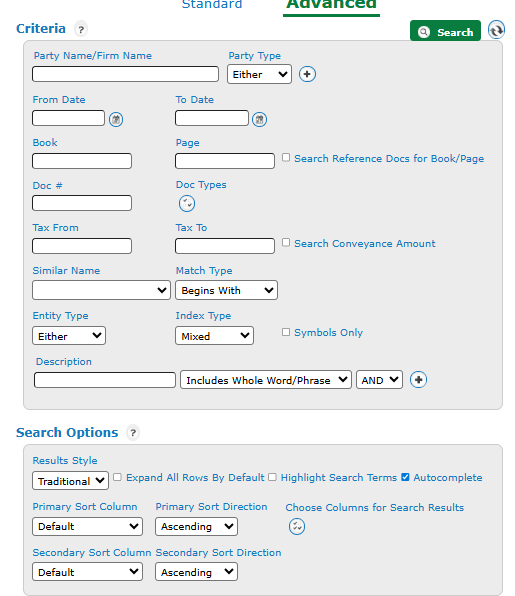
Open the Standard or Advanced search tab and fill in the required fields.
Most users begin with:
- Party Name / Firm Name — enter last name first (e.g., SMITH)
- Party Type — select “Either” to include buyer or seller
- Date Range — optional but helpful for recent filings
Advanced search allows additional filters such as document number, book/page reference, document type, or conveyance amount. Accurate spelling improves document retrieval results significantly.
Filter Results
After clicking the Search button, the system displays a list of matching records. If many results appear, refine them using available filters:
- Narrow the date range
- Select a specific document type
- Adjust match settings (e.g., “Begins With”)
- Sort by recording date or name
View Record Details
Select a record from the results list to open its detailed page. This section provides key official information, including:
- Names of involved parties
- Recording date and time
- Document classification
- Legal property description
- Instrument or reference number
Download or Print Documents
Many entries include scanned images of the original filing. Users can typically:
- View the document image online
- Download a digital copy (often PDF format)
- Print for personal records or legal use
Offices Responsible for Public Records in Brown County
Several government offices share responsibility for maintaining public information in Brown County, Ohio, each managing different types of official documents. Residents searching for auditor public records, property tax records, land filings, or court files must contact the correct department. Knowing which office holds which record saves time and prevents confusion during a public records search.
The Role of the Brown County Auditor
The Auditor’s Office is the primary source for property tax records and property assessment data. This office maintains detailed information about every parcel in the county, including ownership history, assessed value, tax amounts, and property characteristics.
Key records handled by the Auditor include:
- Property ownership and parcel data
- Assessed market values
- Property tax bills and payment history
- Homestead exemptions and credits
- Property transfers for tax purposes
- GIS parcel maps
Recorder, Auditor, and Other Offices — What’s the Difference?
Public records are divided among several departments, each with a specific function.
Auditor vs. Recorder
- Auditor: Focuses on valuation, taxation, and parcel information
- Recorder: Maintains legal land documents such as deeds and mortgages
The Brown County Recorder’s Office preserves the official history of property ownership by recording documents that transfer or affect title. Meanwhile, the Auditor tracks how those properties are taxed and assessed.
Other important offices include:
- Clerk of Courts: Court filings, civil and criminal cases
- Treasurer: Tax collection and payment processing
- Probate Court: Wills, estates, guardianships, marriage licenses
- Health Department: Birth and death certificates
Which Office Handles Which Record Type?
Use this quick reference to locate records efficiently:
- Property & Tax Information
Auditor — parcel data, values, tax records - Land Ownership Documents
Recorder — deeds, mortgages, liens, easements - Tax Payments & Delinquencies
Treasurer — billing and collections - Court Cases & Legal Filings
Clerk of Courts — lawsuits, judgments, criminal records - Vital Records
Health or Probate offices — births, deaths, marriages
Brown County Auditor Public Records
The Brown County Auditor maintains detailed financial and property documentation for residents of Brown County, Ohio. When individuals conduct an auditor public records search, they are typically seeking property tax records, assessment data, ownership history, or parcel details. These records are essential for understanding tax obligations, confirming ownership information, and reviewing land records for real estate decisions. The Auditor’s Office ensures record transparency by making valuation and taxation information accessible to the public. Whether for buying property, verifying tax amounts, or conducting research, these public records play a key role in informed decision-making.
What Records the Auditor Provides
The Auditor’s Office is responsible for maintaining property-related financial documentation used for taxation and assessment purposes. These records help determine how much property tax is owed and ensure that valuations reflect fair market standards. The office tracks parcel-level data and updates ownership information after transfers are processed. While it does not record legal deeds, it reflects ownership changes for tax purposes. These records are available for public inspection through the county’s online lookup system.
Key records include:
- Property tax records and payment status
- Assessment data and tax valuation figures
- Parcel details such as lot size, property class, and improvements
- Ownership history for tax reporting purposes
- Property transfer information affecting assessed value
- Homestead exemptions and tax credit applications
How Often Records Are Updated
Public records maintained by the Auditor are updated based on statutory schedules and transactional activity. Property transfers are reflected after documentation is processed, while tax payments are updated once recorded by the Treasurer. Ohio counties conduct full property reappraisals every six years, with a value update at the three-year midpoint. These reassessments ensure tax valuation remains aligned with current market trends. However, online databases may show short administrative delays before changes appear.
Update cycles typically include:
- Immediate updates after recorded property transfers
- Regular tax payment postings
- Six-year full reappraisals
- Three-year interim valuation adjustments
- Updates after new construction or parcel splits
Accuracy and Verification Notes
The Auditor’s Office works to maintain accurate assessment data and parcel information, but users should understand that online records are provided for informational purposes. Ownership history reflects tax listings and may not represent full legal title chains. Minor discrepancies can occur due to processing times or data entry errors. For official legal verification, it is recommended to cross-check information with the county recorder or request certified copies when required. Reviewing multiple sources ensures complete and accurate document retrieval.
Important verification considerations:
- Online records may not replace certified copies
- Legal title history is maintained separately
- Data depends on reported and inspected property details
- Always verify for real estate closings or legal matters
Property Tax Records in Brown County
Property tax records in Brown County, Ohio provide detailed information about how real estate is assessed and taxed each year. These records are maintained by the Brown County Auditor and reflect a property’s assessed value, applicable tax rates, exemptions, and payment history. They are considered public documentation and play an essential role in maintaining transparency in local government taxation. Whether reviewing annual tax bills or completing a property tax payment, verifying assessment data helps residents understand their financial obligations and how local services are funded.
What Property Tax Records Include
Property tax records contain a wide range of financial and parcel-based details. These records are organized by parcel number and property owner name, making them searchable through the county’s official system. Each record is designed to show how taxes are calculated and whether payments are current.
Typical information found in property tax records includes:
- Assessed value of land and improvements
- Current and previous year tax bills
- Tax rates applied to the property
- Payment history and outstanding balances
- Property classification (residential, agricultural, commercial)
- Approved exemptions such as homestead or rollback credits
How Property Owners Use Tax Records
Homeowners regularly access property tax records to confirm billing accuracy, review assessment data, and verify payment status. If a property owner believes their assessed value is incorrect, they may use this information to file an appeal during the designated review period. Tax records also help owners track exemptions that reduce their tax burden and ensure credits are properly applied.
Additionally, payment history allows owners to confirm that installments have been processed and that no penalties or late fees are owed. Keeping accurate records helps prevent disputes and supports financial planning.
Why Buyers and Investors Rely on Them
Real estate buyers and property investors carefully review property tax records before making purchasing decisions. Tax bills reveal ongoing costs that affect affordability and long-term investment returns. Assessment data can also signal whether property values are rising or subject to future adjustments.
Investors use payment history to identify potential liens or delinquent taxes, which may impact a transaction. By examining tax rates and exemption status, buyers gain a clearer understanding of total ownership costs. Overall, property tax records provide critical financial insight that supports informed real estate and investment decisions.
Downloadable Documents & Available Report Types
Residents searching public records in Brown County, Ohio can access a variety of downloadable documents and public reports through the county’s official systems. These records are primarily maintained by the Brown County Auditor and are designed to provide convenient online document retrieval. Many records are available for instant download, allowing users to save PDFs, print tax summaries, or review assessment reports directly from their devices.
What Documents Can Be Downloaded Instantly
Several types of downloadable documents are typically available through the county’s property and tax database. These documents provide detailed financial and parcel-level information for property owners, buyers, and researchers.
Common downloadable public reports include:
- Property tax bills (current and prior years)
- Payment history summaries
- Parcel detail reports
- Assessment reports showing land and building values
- Tax summaries outlining rates and levies
- Ownership and property transfer summaries
File Formats Supported
Most public reports are provided in commonly supported digital formats. The goal is to ensure compatibility across devices and allow easy sharing for legal, financial, or personal use.
Typical file formats include:
- PDFs for printable tax bills and official summaries
- Downloadable data files for property details
- Printable web-based reports formatted for standard paper sizes
Open Records Law in Brown County
The open records law in Brown County, Ohio is governed by the broader public access framework established at the state level under the Ohio Public Records Act, commonly referred to as part of Ohio Sunshine Laws. These laws are designed to promote government transparency by granting citizens the legal right to inspect and obtain copies of public documents. Whether requesting property files, meeting minutes, financial reports, or administrative records, residents have the authority to submit a public records request to the appropriate county office.
Open access to government documentation strengthens accountability and ensures that public agencies remain transparent in their operations. In Brown County, departments such as the Auditor, Recorder, Clerk of Courts, and other local offices are required to comply with state open records law when handling valid requests.
Legal Right to Access Records
Under Ohio law, any person—regardless of residency—has the right to request public records without stating a reason. A public records request may be made in writing, electronically, or in person. Government offices must make records available for inspection during regular business hours and provide copies within a reasonable period.
The law covers a wide range of public documentation, including:
- Property tax and assessment records
- Meeting minutes and resolutions
- Budget reports and financial statements
- Court filings and administrative records
- Contracts and government correspondence
Timeframes for Responses
Ohio’s open records law requires public offices to respond to requests within a “reasonable time.” While the statute does not define a specific number of days, agencies are expected to process straightforward requests promptly. If a request is unclear or overly broad, the office may seek clarification to avoid delays. For large or complex requests, agencies may need additional time to gather, review, and redact sensitive information. Communication between the requester and the office often helps streamline the process and reduce response time.
Records That May Be Exempt
Although the law strongly supports transparency, certain records may be exempt from disclosure. These exemptions protect privacy, security, and sensitive information. Examples of commonly exempt records include:
- Confidential law enforcement investigatory records
- Social Security numbers and personal identifiers
- Medical or health-related information
- Certain juvenile or sealed court records
- Security plans and infrastructure details
Transparency & Public Accountability in Brown County
Transparency and public accountability are core principles guiding public administration in Brown County, Ohio. When residents have open access to government records, they can better understand how public funds are managed and how official decisions are made. This openness strengthens ethical governance and reinforces public trust. Accessible documentation ensures that government actions remain visible and subject to review by the community.
How Record Access Promotes Fairness
Open record access promotes fairness by giving all citizens equal visibility into government operations. When tax data, assessment reports, and financial summaries are publicly available, it reduces the risk of favoritism or hidden decision-making. Public oversight becomes possible because residents can independently verify information and compare official data with their own records.
Key ways record access supports fairness include:
- Equal access to financial and property data
- Ability to verify tax calculations and assessed values
- Greater citizen oversight of spending and budgeting
- Reduced risk of administrative errors going unnoticed
- Improved confidence in public decision-making
Role of Digital Records in Transparency
Digital systems have significantly improved how transparency is implemented. Instead of relying solely on in-person visits, residents can now search and retrieve records online. This makes public accountability more practical and accessible to a wider audience.
Digital record systems enhance transparency by:
- Allowing online document searches and downloads
- Providing instant access to public reports
- Reducing paperwork delays
- Standardizing data storage for consistency
- Improving long-term record preservation
Frequently Asked Questions
Public records often raise detailed questions for property owners, buyers, researchers, and taxpayers. The FAQs below explain how public records work in Brown County, Ohio, including availability, legal use, update timing, and error resolution. Each answer is written to provide clarity, build confidence, and support informed use of county-maintained information.
Are Brown County public records free?
Most Brown County public records can be viewed online without any charge. Property summaries, ownership details, assessment data, and basic tax information are usually available for public review. Offices such as the Brown County Auditor provide this access to promote transparency and accountability. Viewing records online does not require registration or payment in most cases. Fees may apply when users request printed copies, certified documents, or bulk data files. These costs are set by law and cover reproduction or administrative handling. Free access applies primarily to viewing and basic downloads.
How do I request records that are not available online?
If a record cannot be found through online lookup tools, a formal public records request may be submitted. Requests should be directed to the office responsible for maintaining that record. Providing specific details such as names, parcel numbers, dates, and document types helps speed processing. Requests can typically be submitted by email, written form, or in person. Under the Ohio Public Records Act, agencies must respond within a reasonable timeframe. If a request is unclear or too broad, the office may ask for clarification. Communication during the process helps avoid delays.
Are online public records legally valid?
Online public records are considered informational copies intended for reference and review. They are suitable for research, property checks, and preliminary verification. Many users rely on them for planning, budgeting, and general record confirmation. For official legal purposes, such as real estate closings, court filings, or financial disputes, certified copies are usually required. Certified records are issued directly by county offices and include official seals or verification marks. Users should confirm document requirements before relying on online versions for formal matters.
How current is auditor data?
Auditor data is updated regularly, but timing depends on the type of record. Property ownership changes appear after deeds are processed and verified. Tax payment updates follow posting by the county treasurer. Assessment values follow Ohio’s scheduled reappraisal and interim update cycles. Short administrative delays can occur between real-world changes and online display. Online systems reflect processed data rather than real-time activity. For urgent matters, contacting the Auditor’s Office directly can provide the most current confirmation.
Who should I contact if I find an error in a public record?
The correct office depends on the type of error identified. Property values, parcel details, and tax calculations should be reported to the Auditor’s Office. Errors related to recorded deeds, names, or ownership documents should be directed to the Recorder’s Office. Court-related records belong with the Clerk of Courts, while tax payment issues may involve the Treasurer. Reporting errors promptly helps maintain accurate public documentation. County offices can explain correction steps and required documentation if changes are needed.