Brown County property valuation refers to how the county determines the value of land and buildings for tax and record purposes. This process helps set fair property taxes and supports accurate public records for homes, businesses, and land parcels. The county uses property assessment data, recent sales, and physical property features to calculate value. Buyers, sellers, and owners often review county property values to make smart real estate decisions. The local property valuation system follows state laws to keep assessments consistent and transparent.
Brown County property valuation also affects financial planning and property transactions. Owners use assessed values to estimate tax costs, while buyers compare property value determination data before making offers. Market value reflects what a property could sell for in an open market, while assessed value is used for tax calculations. Brown County updates assessments on scheduled review cycles to reflect changes in the market. This process helps maintain fairness and accuracy across all property types in the county.
What Is Property Valuation and Why It Matters
Property valuation is the process of estimating how much a property is worth based on location, condition, and market data. It helps set market value for taxes, sales, and lending decisions. Brown County Auditor records and valuation references are often used alongside sales data, property features, and local trends to create a fair market value. Assessors and appraisers review size, age, upgrades, and neighborhood demand to produce a home value estimate. This estimate acts as a reference point for many legal and financial tasks.
Who Uses Property Valuation Data
Property valuation data supports many groups and public systems. Each group uses the numbers for different purposes.
- Property owners: Owners check valuation reports to review tax bills and equity.
- Lenders and banks: Mortgage lenders use real estate valuation to approve loans and set interest rates.
- Tax authorities: Local governments use assessed values to calculate property taxes.
- Buyers and sellers: Real estate agents and buyers compare market value to sale prices.
How Valuation Affects Taxes and Resale
Valuation plays a direct role in property taxes. A higher assessed value can raise annual tax costs. A lower assessment can reduce taxes if the property value falls. Counties review values on a regular cycle to reflect recent sales and local trends. Market value also affects resale. Buyers often compare the home value estimate with listing prices. If market value matches the asking price, sales move faster. If the estimate is far lower, buyers may negotiate or walk away. Property valuation offers a clear picture of property worth. With accurate valuation data, owners, buyers, and lenders can make informed decisions with confidence.
How to Perform an Assessed Value Lookup
The assessed value lookup tool for Brown County, Ohio lets users find official property records, tax values, and ownership details in seconds. This system shows market value, assessed value, land value, and building value for each parcel. Users can search by owner name, parcel number, or property address to view complete property data from county records.
Open the Property Search Website
- Open a web browser.
- Enter the official link: https://realestate.browncountyauditor.org
- The homepage will show search options for real estate records.
Choose a Search Method
The tool provides three main search methods for property value search.
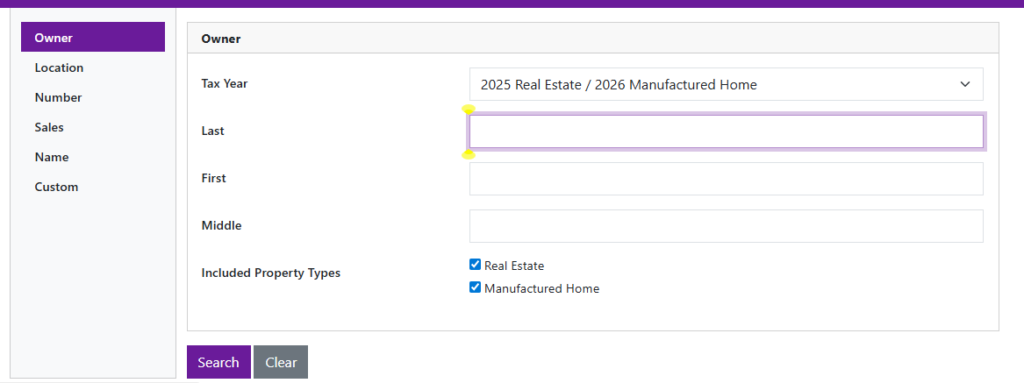
Search by Owner Name
- Click the Owner Name Search option.
- Enter the last name or full name of the property owner.
- Click the search button to see matching properties.
Search by Parcel Number
- Click the Parcel Search option.
- Enter the parcel number or permanent parcel ID.
- Click search to open the exact parcel record.
Search by Property Address
- Click the Address Search option.
- Enter the house number and street name.
- Add city or ZIP code if requested.
- Click search to view address-based valuation results.
Open the Property Record Page
After searching, a results list will appear.
Click the property record to open the detailed parcel page with full data.
How to Read Valuation Fields on the Tool
The property record page includes several valuation sections.
- Market Value: Estimated fair market value based on recent sales and trends.
- Assessed Value: Taxable value used to calculate property taxes.
- Land Value: Value assigned to the land only.
- Improvement Value: Value assigned to buildings or structures.
- Total Value: Combined land and improvement value.
Where Market and Assessed Values Appeal
Market value and assessed value appear in the Valuation Summary or Assessment Data section of the property record page. These values often appear side by side for easy comparison.
Property Assessment in Brown County
Property assessment in Brown County is the official process the county uses to determine a property’s taxable value. This process establishes how much property owners owe in local taxes each year. Assessments are based on laws and guidelines set by the state of Ohio and help ensure fair taxation across all county properties. A tax assessment is not the same as an appraisal. While an appraisal estimates the market value for buying or selling purposes, a property assessment calculates the assessed value, which is used specifically for taxation. The assessed value is usually a percentage of the property’s market value, often lower, to reflect uniformity and fairness in the county assessment system.
What Property Assessment Legally Means
In Brown County, property assessment is a legal process governed by state law. The county auditor is responsible for reviewing all real property within the county. Assessors consider factors such as:
- Location and neighborhood trends
- Land size and topography
- Buildings, improvements, and age of structures
- Comparable sales and local market activity
Assessment vs. Appraisal
Property assessment differs from appraisal in several key ways:
- Purpose: Assessment is for taxation; appraisal is for buying, selling, or financing.
- Value type: Assessments use assessed value, often a fraction of market value, while appraisals estimate full market value.
- Frequency: Assessments are updated on a set schedule determined by the county (often annually or every few years). Appraisals may occur anytime a sale or mortgage requires it.
Why Assessed Value Is Often Lower Than Market Value
The assessed value is intentionally set below the full market price to create a fair system for taxation. If every property were taxed at full market value, tax burdens could become unequal and fluctuate drastically based on market trends. By using a percentage of market value and applying the county assessment system, Brown County maintains predictable tax revenue and equitable treatment for all property owners.
Market Value vs Assessed Value
Market value and assessed value are two key figures in property ownership, but they serve very different purposes. Market value reflects what a buyer might pay for a property in an open market sale price, while assessed value is used to calculate property taxes and is typically lower than market value. Understanding these differences helps homeowners, buyers, and investors make informed decisions.
How Market Value Is Calculated
Market value is an estimate of the price a property would likely sell for under normal conditions. Assessors and appraisers consider:
- Recent sales of similar properties in the neighborhood
- Property size, age, and condition
- Location, amenities, and zoning
- Local market trends and demand
How Assessed Value Is Calculated
Assessed value is determined using the valuation ratio or assessment percentage set by the county or state. In Ohio, the assessed value is usually a fraction of the market value, such as 35% of the total market price. County assessors apply this ratio to ensure consistency and fairness in the county assessment system.
Key calculation example:
If a home has a market value of $200,000 and the assessment percentage is 35%, the assessed value would be:
$200,000 × 0.35 = $70,000
Market Value vs Assessed Value
| Feature | Market Value | Assessed Value |
|---|---|---|
| Purpose | Buying/selling and financing | Property tax calculation |
| Basis | Open market sale price | Fraction of market value (assessment percentage) |
| Who Uses It | Buyers, sellers, lenders | County auditor, tax authorities |
| Frequency | Updated with appraisals or sales | Updated on scheduled county assessment cycle |
| Typical Amount | Full market worth | Often lower than market value |
Which Value Affects Property Taxes?
Property taxes are calculated using the assessed value, not market value. The county multiplies the assessed value by the local tax rate to determine the annual tax bill. Market value may influence assessed value indirectly, but it is the assessment percentage that directly determines taxable value.
How Brown County Determines Property Value
Brown County uses a structured valuation method to determine property values for taxation and official records. The process ensures fairness, accuracy, and compliance with Ohio state law. Property owners, buyers, and lenders rely on these official valuations to understand assessed value, plan finances, and make real estate decisions. Brown County applies a combination of appraisal processes and established county assessment systems to calculate property value. These methods allow the county to evaluate all properties efficiently while keeping results consistent and transparent. The main techniques include the sales comparison approach, cost approach, and income approach.
Sales Comparison Method
The sales comparison approach is the most common valuation method for residential properties. It relies on analyzing recent sales of comparable properties in the area to estimate fair market value. Assessors examine properties with similar:
- Location and neighborhood characteristics
- Lot size and dimensions
- Home size, style, and age
- Condition, upgrades, and amenities
-+By comparing recent sale prices of these similar properties, the assessor uses data gathered through a property search to determine an estimated market value for the subject property. Adjustments are made for differences in features or condition to create a fair and balanced assessment.
Key benefits:
- Reflects current market trends
- Provides a realistic price for tax purposes
- Easy to apply for single-family homes
Cost-Based Valuation
The cost approach calculates property value by estimating the cost to replace or reproduce the structure minus depreciation, then adding land value. It is particularly useful for newer constructions, special-purpose buildings, or unique properties where comparable sales are limited.
Steps in cost-based valuation:
- Estimate the replacement or reproduction cost of the building using current construction prices.
- Deduct depreciation for age, wear, or functional obsolescence.
- Add the value of the land based on its location and market conditions.
Income-Based Valuation (for Rentals/Commercial)
For rental and commercial properties, the income approach is used. This method estimates property value based on the income it generates. The assessor calculates the present value of expected future cash flows from the property, considering:
- Rental income potential
- Vacancy rates and operating expenses
- Capitalization rates (rate of return expected by investors)
The formula simplifies to:
Property Value = Net Operating Income ÷ Capitalization Rate
This method provides a realistic measure of value for income-producing properties, such as apartment buildings, retail spaces, or office complexes.
Benefits of the income approach:
- Reflects profitability of investment properties
- Helps county calculate fair assessed value for taxation
- Aligns with investor expectations in the local market
The Appraisal Process Used for Property Assessment
The appraisal process in Brown County ensures that property assessments are accurate, fair, and consistent across the county. This process establishes the assessed value for taxation purposes while reflecting the true market potential of each property. It combines on-site inspections, neighborhood data analysis, and structured valuation methods to produce reliable results for homeowners, buyers, and lenders.
Steps to Appraisal Workflow
Brown County follows a clear workflow to appraise properties efficiently and fairly. Each step is designed to capture all relevant data and produce a reliable assessment that reflects current market conditions. Assessors use a combination of property inspections, comparable sales, and valuation models to determine a final value.
Key steps include:
- Data Collection: Gather information on land size, building type, age, and improvements.
- Property Inspection: Record physical characteristics such as rooms, condition, and construction materials.
- Neighborhood Analysis: Examine recent sales, local market trends, and economic factors affecting property prices.
- Valuation Data Analysis: Apply sales comparison, cost, or income approaches to calculate value.
- Assessor Review: Verify calculations, apply adjustments, and ensure compliance with Ohio law.
Role of Neighborhood and Market Data
Neighborhood data plays a vital role in the appraisal process. Assessors analyze comparable property sales, zoning trends, and community development projects to ensure that each property’s value aligns with local market conditions. Properties in high-demand areas or well-maintained neighborhoods often receive higher valuations than similar properties in less developed areas.
Factors considered in neighborhood analysis include:
- Recent sales of similar homes
- Local economic conditions
- School district ratings and amenities
- Accessibility and infrastructure improvements
Impact of Physical Property Characteristics
Physical features of a property significantly influence its assessed value. Assessors review the condition, age, and size of structures, along with any upgrades or additions. Well-maintained properties with modern improvements generally receive higher assessments, while older or deteriorating properties may be valued lower.
Property features that affect value:
- Lot size and layout
- Building age and construction quality
- Number of bedrooms, bathrooms, and total square footage
- Additional structures such as garages, decks, or pools
Reassessment Cycle in Brown County
The reassessment cycle in Brown County is the schedule by which all properties are periodically reviewed and updated to reflect current market conditions. This ensures that property taxes remain fair and equitable across the county. Reassessments help maintain a balance between older and newer properties, so no single property is unfairly taxed compared to similar parcels in the same neighborhood.
How Often Reassessments Occur
Brown County conducts countywide reassessments on a regular schedule, typically every few years, depending on state guidelines. During each cycle, the county auditor reviews all property records and updates assessed values to match the current market value trends.
- Residential and commercial properties are reviewed systematically.
- Older assessments are updated to reflect changes in the local real estate market.
- Special attention is given to properties that have undergone improvements or renovations.
What Triggers a Reassessment
While reassessments follow a set schedule, certain events can also trigger an update to a property’s value outside the normal cycle:
- Significant home improvements or additions
- Construction of new buildings or structures on the property
- Major changes in land use or zoning
- Transfers of property ownership or sales
How Reassessment Affects Tax Bills
A reassessment can directly impact a property owner’s tax bill. If the updated assessed value increases, property taxes may rise proportionally. Conversely, if market trends or property conditions lead to a lower assessed value, taxes could decrease.
Key points to know:
- Reassessments adjust the taxable value used in calculations.
- Local tax rates remain the same, but the total tax amount may change.
- Reviewing reassessment notices allows owners to appeal if they believe the value is inaccurate.
Factors That Influence Property Valuation in Brown County
Brown County property valuation is influenced by several factors that help determine a property’s assessed value for taxation and its estimated market value for real estate purposes. Understanding these factors helps property owners, buyers, and investors make informed decisions about taxes, sales, and property investments.
Location & Neighborhood Trends
The location of a property is one of the most significant influences on property valuation. Assessors consider neighborhood characteristics, accessibility, and local amenities when determining value. Properties in well-developed neighborhoods with good schools, parks, and nearby services often have higher valuations.
Key location factors include:
- Proximity to schools, shopping, and transportation
- Safety and crime rates in the neighborhood
- Future development plans or zoning changes
- Overall neighborhood desirability and aesthetic appeal
Property Size & Structure
The physical characteristics of a property also play a critical role. Square footage, lot size, and building layout are major contributors to the final assessment. Larger properties generally have higher valuations, but the quality and functionality of space are also important.
Property size factors include:
- Total square footage of the building
- Number of bedrooms and bathrooms
- Lot dimensions and usable land
- Building style and structural design
Improvements & Renovations
Upgrades and renovations can significantly impact Brown County property valuation. Modern kitchens, bathrooms, energy-efficient installations, and structural improvements increase a property’s appeal and market value. Conversely, outdated features or deferred maintenance may lower valuation.
Factors considered in improvements:
- Recent additions or expansions
- Renovated kitchens, bathrooms, or flooring
- New roofing, plumbing, or HVAC systems
- Finished basements, garages, or outdoor structures
Market Conditions
Local real estate trends and recent sales in Brown County influence both market value and assessed value. Properties are evaluated based on comparable sales and overall market activity to ensure values remain current. Economic shifts, interest rates, and supply-demand dynamics in the housing market can affect valuations.
Market condition indicators include:
- Recent sales of similar properties
- Regional supply and demand trends
- Economic factors impacting property prices
- Seasonal variations in the real estate market
How Property Valuation Impacts Property Taxes
A property’s valuation directly affects its tax assessment in Brown County. The county uses the assessed value to calculate property taxes, which are based on the taxable assessment and local levy rates. Understanding this connection helps property owners anticipate potential changes in their tax bills and plan accordingly.
How Valuation Connects to Taxes
The assessed value determined during the appraisal process serves as the foundation for property tax calculation. The county multiplies the assessed value by the combined local tax rates, which may include school, municipal, and county levies.
Key points about the connection:
- Higher assessed values generally lead to higher property taxes.
- Tax rates remain consistent within each levy, so only the assessed value changes the tax amount.
- Properties with lower assessments benefit from proportionally lower taxes.
Why Higher Value ≠ Exact Tax Increase
Many homeowners assume that if their property value rises, taxes will increase by the same percentage. However, this is not always true. Taxable assessment is influenced by factors like levy limits, tax rate adjustments, and exemptions.
Examples of mitigating factors:
- Local levies may be capped, limiting the total tax increase.
- Homestead or senior exemptions can reduce taxable assessment.
- County-wide reassessments may balance increases with decreases across neighborhoods.
Common Misconceptions
Property owners often misunderstand how valuation impacts taxes. Some believe that small improvements or cosmetic upgrades drastically raise taxes, while others assume assessed value equals market value. Both are misconceptions.
Clarifying points:
- Assessed value is usually a percentage of market value, not the full price.
- Tax bills are based on taxable assessment after exemptions and levy impacts.
- Periodic reassessments update values but aim for fairness, not punishment.
What to Do If You Disagree With Your Assessed Value
Sometimes property owners in Brown County may feel that their assessed value is too high or does not reflect the true condition of their property. In such cases, filing a property assessment appeal allows homeowners to request a review and potentially adjust their taxable assessment. Understanding the process and preparing proper evidence increases the likelihood of a fair outcome.
When an Appeal Is Justified
A valuation dispute may be justified if the assessed value does not accurately reflect the property’s market condition or physical characteristics. Common reasons for appeal include:
- Recent property damage or deterioration that lowers value
- Assessments that significantly exceed comparable properties in the neighborhood
- Errors in property data, such as incorrect square footage, lot size, or structural details
- Improvements or renovations not accounted for in the assessment
Evidence to Gather
Gathering proper documentation is crucial for a successful assessment review. Evidence should support your claim that the property’s assessed value is incorrect or inflated.
Important documents to include:
- Recent appraisals or independent property evaluations
- Photographs showing property condition or changes
- Records of recent sales for similar properties in the neighborhood
- Receipts or permits for improvements or renovations
General Appeal Steps
Filing a property assessment appeal in Brown County involves a straightforward process. While not legal advice, the general steps include:
- Review Your Assessment Notice: Compare the assessed value with your own research and market data.
- Collect Supporting Evidence: Gather appraisals, sales comparisons, and any documentation showing property discrepancies.
- Submit an Appeal Form: Contact the Brown County Auditor’s Office to obtain the official appeal form and submit it before the deadline.
- Attend the Review Hearing: The county assessor may schedule a hearing or provide a written response. Present your evidence clearly and concisely.
- Receive the Decision: The auditor will either adjust the assessed value or explain why it remains unchanged.
Residential vs Commercial Property Valuation
Residential and commercial properties in Brown County are valued using different valuation methods to reflect their distinct characteristics and purposes. While residential properties focus on comparable sales and physical features, commercial properties often rely heavily on income potential and usage patterns. Understanding these differences helps owners, buyers, and investors interpret assessed values accurately.
Differences in Methodology
Residential assessment primarily uses the sales comparison approach, which evaluates recent sales of similar homes in the neighborhood. Assessors consider physical features, lot size, condition, and amenities to estimate market value. Residential properties generally have straightforward valuation factors such as square footage, number of bedrooms, and overall property condition.
Key residential valuation factors include:
- Comparable sales in the same area
- Lot and building size
- Home condition and upgrades
- Neighborhood trends and accessibility
Income Approach Emphasis for Commercial Properties
For commercial or income-producing properties, the income approach is a primary tool. Assessors estimate value based on the property’s potential to generate rental income, factoring in operating expenses and vacancy rates. This method ensures the property’s assessed value aligns with its real-world financial performance.
Income approach factors include:
- Gross rental income potential
- Operating and maintenance costs
- Vacancy rates and tenant reliability
- Capitalization rate (expected return on investment)
Usage-Based Valuation Factors
Commercial properties are also influenced by usage-based factors. Zoning, property type, and market demand for specific business purposes affect the assessment. For example, a warehouse, retail store, or office building in the same location may have different valuations based on profitability and utility.
Other usage-based considerations:
- Functional design for intended business use
- Location suitability for commercial operations
- Market trends in the specific property type
Frequently Asked Questions
Property valuation can be complex, and many homeowners and investors have questions about how assessed values are determined, how they impact taxes, and what to do if they disagree with their assessment. This FAQ section provides clear, practical answers to the most common questions, helping property owners understand their property’s value, tax obligations, and appeal options.
How accurate is assessed value?
Assessed value gives a reliable estimate for property taxes but may not match the exact selling price. Brown County uses a structured appraisal process, including sales comparisons, cost approach, and income-based methods, to determine values. Accuracy depends on updated property data, neighborhood sales trends, and any recent improvements or changes to the property. While it may differ slightly from market price, it provides a fair and standardized basis for tax calculations. Understanding this helps property owners anticipate tax obligations more confidently.
Is assessed value the same as selling price?
No, the assessed value is not the same as the property’s selling price. Selling price reflects what a buyer is willing to pay in the open market, while assessed value is determined using a county valuation method and often represents only a portion of market value. This figure is used to calculate the taxable assessment, which forms the basis of property taxes. Differences arise because assessed value accounts for exemptions, levy impacts, and standardization across the county. Property owners should view assessed value as a taxation tool, not an exact market price.
How often is property valuation updated?
Brown County updates property valuations according to the reassessment cycle, which typically occurs every few years. In addition, major events like property sales, renovations, or zoning changes can trigger an off-cycle review. These updates ensure that assessed values reflect current market conditions and remain fair for all property owners. The goal is to maintain consistency and equity in taxation, so changes in property size, condition, or neighborhood trends are properly accounted for. Monitoring reassessment schedules helps owners anticipate tax adjustments.
Can renovations increase assessed value?
Yes, renovations and upgrades can raise a property’s assessed value in Brown County. Improvements such as remodeled kitchens, bathrooms, new roofing, energy-efficient installations, or structural additions increase the property’s utility and market appeal. Conversely, deferred maintenance or damage may lower assessed value. The county auditor incorporates these changes during the appraisal process. Keeping detailed records of upgrades helps ensure that your property is assessed fairly and accurately, reflecting its current condition.
How can I dispute an assessed value?
If a property owner believes the assessed value is too high, they can file a property assessment appeal. The process includes reviewing the assessment notice, gathering evidence like appraisals, comparable sales, or repair records, and submitting the appeal to the Brown County Auditor. The assessor reviews the documentation and may schedule a hearing. Organized evidence increases the chance of a fair adjustment. Filing an appeal allows property owners to ensure that their taxable assessment accurately reflects the true value of the property.